
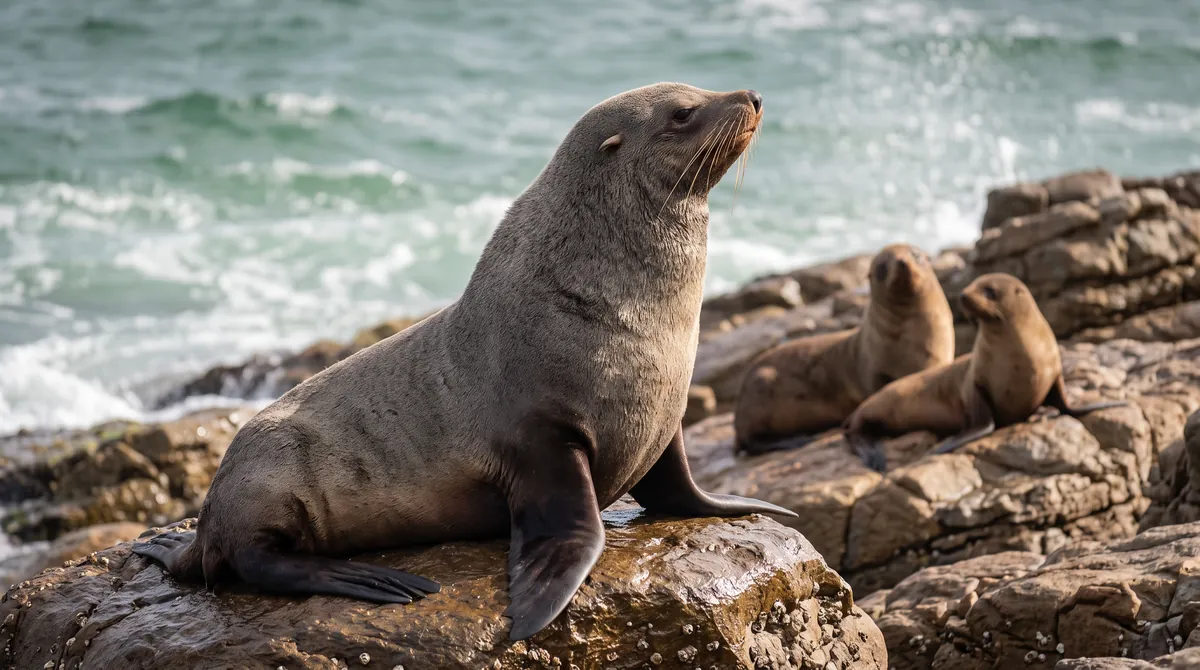
Are seals dangerous?
Mostly they are curious. Sometimes they want space. Here is how to tell the difference.
The short answer
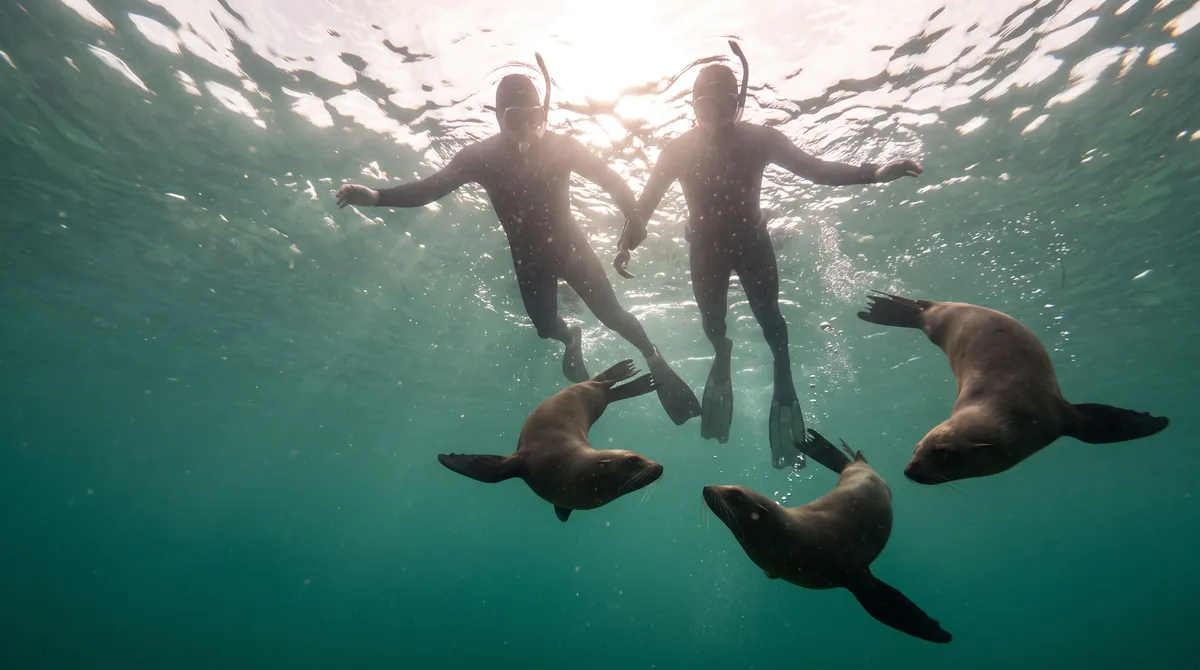
Seals are wild predators and should be treated like any large wild animal: with distance on land and respect in the water. Around snorkellers, Cape fur seals are overwhelmingly curious and playful. Problems come from people touching, feeding or cornering them, and from the occasional sick animal.
Reading a seal
Relaxed and curious
- Looping passes, rolling on to its back to look at you
- Blowing bubbles, hanging upside down
- Approaching, then peeling away
Wants space
- Open-mouth displays or lunges that stop short
- Loud barking underwater, with bursts of bubbles
- A big animal repeatedly placing itself between you and the rocks
If you see the second set, back away slowly and regroup with your guide. Bulls defending territory in the breeding season, and mothers near pups, need the most room.
Rules that keep everyone safe
- Never touch, feed or chase a seal.
- Keep your hands in and your movements slow.
- Do not dive down into a group of seals.
- Stay away from the rocks where they haul out.
- Stay with your group and your guide.
- If a seal acts strangely, leave the water.
If you are bitten
Wash the wound with soap and running water for at least ten minutes. Go to a doctor, clinic or hospital the same day. Seal bites can carry bacteria that cause stubborn infections, and since 2024 rabies has been confirmed in Cape fur seals along the southern African coast, so a doctor will assess whether you need rabies post-exposure treatment. It is effective when started promptly.
Our full precautions are on the safety page.
Seals on the beach
A seal on a beach is not there to meet you. Stay well back, keep dogs leashed and never try to push it back into the sea. Watch for signs of illness: unprovoked aggression, biting at objects, convulsions, or no response at all. Report sick, injured or dead seals in Plett to the Marine Animal Stranding Network on 079 463 4837.
Sources
- NICD: Rabies and seals in South Africa
- Plett Tourism, Bitou Municipality and CapeNature statement, 4 December 2024
Last checked 10 October 2026.
Quick answers
Are seals dangerous to swim with?
Rarely, when you follow the rules. Cape fur seals are curious, not aggressive, towards snorkellers, and serious incidents are uncommon. They can bite if grabbed, cornered or startled, and bites carry a risk of infection, so respect matters.
Do seals bite?
They can. Young seals explore with their mouths and may nip a fin or a glove. Any bite that breaks the skin needs thorough washing and same-day medical attention.
What should you do if a seal swims up to you?
Stay calm and still, keep your arms in, and watch. Do not reach out or try to stroke it. If it keeps mouthing your gear, turn away slowly and move towards your guide.
Are seals safe to be around on the beach?
Keep at least a few car lengths away from any seal on a beach, and keep dogs on a lead. A seal on the sand may be resting, injured or sick. In Plett, report it to the Marine Animal Stranding Network on 079 463 4837.
Ready to meet the seals?
Trips leave Central Beach at 10:00, 12:00, 14:00 every day, weather permitting. Pick a date and we will have a wetsuit waiting.